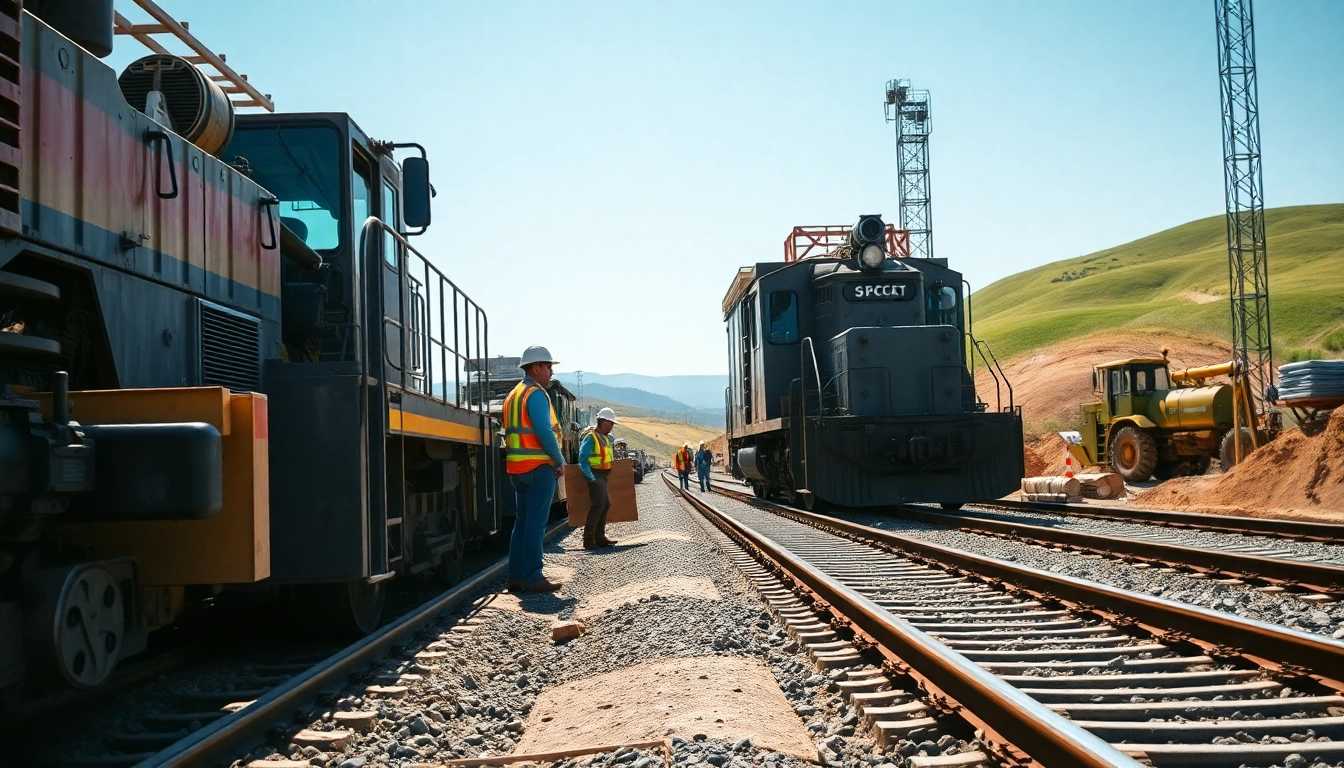
Understanding Railroad Construction Basics
Definition and Importance of Railroad Construction
Railroad construction encompasses the design, development, and establishment of infrastructures, particularly railway lines, that facilitate the movement of goods and passengers. It is a critical component of modern economies, serving as the backbone for trade, providing essential connectivity between regions, and playing a vital role in fostering economic growth. As industries expand and urban areas grow, the demand for efficient transportation networks continues to rise, making Railroad Construction increasingly important.
Key Components of Railroad Infrastructure
Railroad infrastructure consists of several key components that work together to ensure safe and efficient rail transport. These include:
- Track Systems: Comprising rails, sleepers (or ties), ballast, and fasteners, these elements form the fundamental system that supports trains.
- Bridges and Tunnels: Essential for navigating natural obstacles, these constructions ensure the continuity of rail routes.
- Signaling and Communication Systems: These systems are crucial for train operation safety and scheduling, significantly reducing the risk of accidents.
- Stations and Depots: These facilities serve as hubs for passenger and freight services, offering amenities and operational support.
Historical Evolution of Railroad Construction
The history of railroad construction dates back to the early 19th century with the advent of steam locomotives. Initially focused on connecting coal mines with ports, railroads quickly expanded into extensive networks that transformed the transportation landscape. Major milestones include the introduction of standardized gauge, electrification in the 20th century, and the advent of high-speed rail systems in recent decades. Each of these developments has enhanced connectivity, reduced travel time, and improved the overall efficiency of rail transport.
Planning a Railroad Construction Project
Site Assessment and Feasibility Studies
Before embarking on a railroad construction project, thorough site assessments and feasibility studies are essential. These processes include land surveys, environmental impact assessments, and traffic simulations to ensure that the proposed routes are viable. By analyzing geological, hydrological, and environmental factors, planners can make informed decisions that minimize negative consequences while maximizing operational efficiency.
Budgeting and Financial Considerations
Effective budgeting is critical in railroad construction projects. Costs may include land acquisition, materials, labor, permits, environmental mitigation, and long-term maintenance. Project managers must create detailed financial models and secure funding through public-private partnerships, government grants, or private investment to ensure that funds are available throughout the construction phase.
Regulatory Requirements and Approvals
Adhering to regulatory requirements is another crucial aspect of railroad construction planning. Projects must obtain several approvals at federal, state, and local levels, including environmental clearances, safety inspections, and construction permits. Engaging with regulatory bodies early in the process is essential to address potential obstacles and align project objectives with legal stipulations.
Construction Methods in Railroad Construction
Track Installation Techniques
Installing track is one of the most significant aspects of railroad construction. Various methods, including ballast track laying and slab track systems, are employed based on the project requirements. Ballast track relies on loose stones to distribute loads and secure the track, while slab tracks utilize concrete slabs for improved stability and durability, particularly in urban environments or where ground conditions necessitate additional support.
Signaling and Safety Systems Implementation
Integrating signaling and safety systems throughout the construction phase is vital for ensuring the safe operation of rail services. This includes installing automatic train control systems, signals, and communication networks. Modern technologies enable real-time data transmission, enhancing train tracking and management capabilities while significantly reducing the risk of human error.
Integrating Technology in Railroad Construction
Technology plays an increasingly significant role in railroad construction. Advanced engineering software, Building Information Modeling (BIM), and Geographic Information Systems (GIS) aid in design, planning, and project management. Drones and robotics enhance surveying processes, while 3D printing can streamline the production of certain components, thereby improving efficiencies in construction timelines.
Challenges in Railroad Construction
Environmental Impact and Mitigation Strategies
Railroad construction can pose various environmental challenges, such as habitat disruption, soil erosion, and water contamination. To address these concerns, mitigation strategies must be developed, including constructing wildlife crossings, implementing erosion control measures, and restoring areas impacted by construction. Collaborating with environmental experts helps ensure compliance with regulations and promotes sustainable practices.
Labor Shortages and Skilled Workforce Development
The railroad construction industry faces significant labor shortages, primarily due to an aging workforce. Developing initiatives to attract new talent and upskill existing workers is crucial. Partnerships with vocational schools and training programs can create a pipeline of skilled labor, thus aiding in workforce development efforts and ensuring a capable workforce is available for upcoming projects.
Navigating Weather and Ground Conditions
Weather and ground conditions can greatly impact construction schedules and costs. Adverse weather conditions, such as heavy rainfall or extreme temperatures, can delay projects or necessitate additional safety measures. Conducting thorough geotechnical analysis allows project managers to anticipate ground conditions and implement effective countermeasures, thereby minimizing disruptions.
Future Trends in Railroad Construction
Innovations in Materials and Techniques
The future of railroad construction is likely to be shaped by innovations in materials and construction techniques. Lightweight and durable materials, such as composites and advanced steel alloys, can enhance the performance and sustainability of railway systems. Techniques that incorporate modular construction method may also reduce project timelines and labor costs.
Smart Rail Technologies and Their Impact
Smart rail technologies are set to revolutionize how rail networks operate. Internet of Things (IoT) sensors, data analytics, and machine learning will optimize scheduling, maintenance, and asset management. These technologies can predict failures before they occur, enhancing safety and reducing operational disruptions, ultimately creating a more efficient rail network.
Investment Trends and Economic Implications
Investment trends in railroad construction reflect broader economic patterns. Infrastructure spending is expected to increase as governments prioritize transport safety and efficiency. Funding initiatives, such as public-private partnerships, enable substantial investments in updating and expanding rail systems. This commitment to modernizing infrastructure has significant implications for economic development, sustainment of jobs, and enhancement of regional connectivity.
Frequently Asked Questions
What is Railroad Construction?
Railroad construction involves the design and building of rail infrastructure, including tracks, bridges, and stations, facilitating the movement of goods and passengers.
What are the key components of railroad infrastructure?
Key components include track systems, signaling systems, bridges, tunnels, and railway stations, all essential for operational efficiency and safety.
What challenges does railroad construction face?
Challenges include environmental impact, labor shortages, regulatory compliance, adverse weather, and maintaining safety standards during construction.
How is technology changing railroad construction?
Technology enhances railroad construction through advanced engineering tools, automation, smart materials, and data analytics, improving efficiency, safety, and maintenance.
What are the future trends in railway construction?
Future trends include innovations in materials, smart rail technologies, increased investment, and a focus on sustainable practices, shaping modern rail networks.
Contact Information
Call Us: 1 (403) 452-4508
Email: [email protected]
Address: 3950 Fossil Creek Blvd Suite 106, Fort Worth, TX, USA 76137